In the beginning, there was the map (or no map as yet) – and with it, a promise of the unknown. To awaken alone in a strange town, as travel writer Freya Stark once wrote, “is one of the pleasantest sensations in the world. You are surrounded by adventure.”
Stark’s life and work invite us into that adventure: into the uncharted spaces of geography, language, culture – and by extension, the uncharted territory of what travel writing can be.
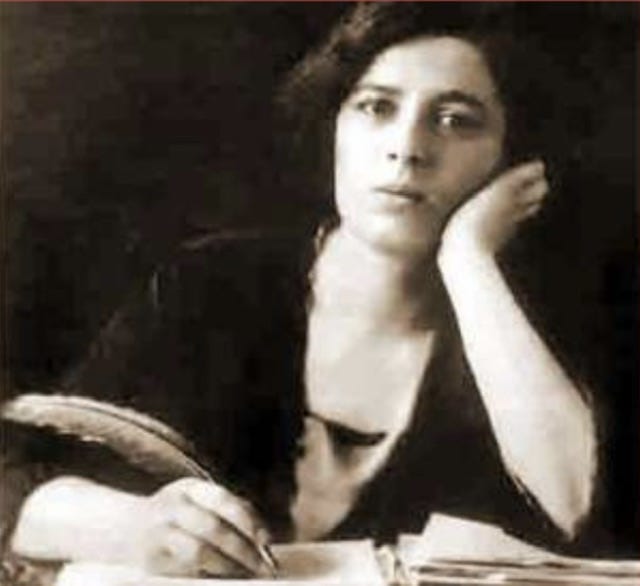
One of the travel writers I read early on, I was drawn to Stark’s writing as a fellow polyglot, and someone equally curious about the world around me. The world of travel writing has changed radically since the desert adventures of Freya Stark, and her writing was of course a product of her times. However, by exploring her singular mixture of linguistic curiosity, personal daring, and literary sensibility, we can explore travel writing both then and now. And ask, what ways can a writer best ‘travel’ these days.
As we trace her journey and reflect on the shift in travel writing’s purpose, we can ask: what of her spirit remains in today’s world of Google Maps, Instagram feeds, and curated “experiences”?
A Portrait of Stark: Languages, Landscapes, and a Life in Motion
Born on 31 January 1893 in Paris to artistic parents, Stark grew up steeped in multiple tongues and cultures. Although she had “no formal education as a child,” she mastered French, German, and Italian before entering the University of London in 1912.
From her early years among northern Italy’s landscapes to her later travels in Persia, Yemen and the Arabian deserts, Stark carried languages, maps and notebooks as companions.
What distinguished her among explorers and travel writers was not just where she went – but how she went: with a belief in the power of language to open doors, and of writing to honour what she found.
Here is a traveller who respected the world she entered by trying to meet it on its own terms – learning Arabic and Persian, studying regional histories, and making space in her prose for detail, nuance and the unexpected.
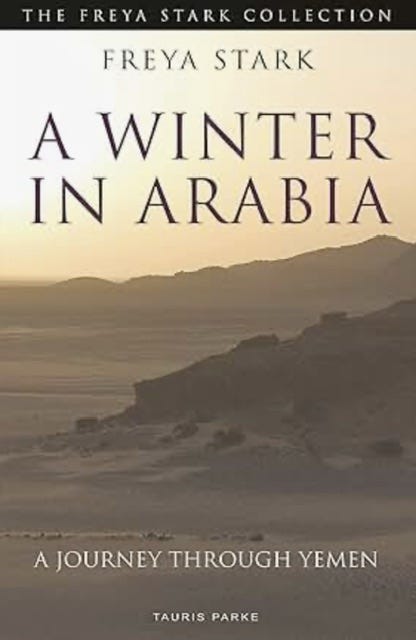
In her book A Winter in Arabia, she wrote:
“I had to write a decalogue for journeys… Then would come the capacity to accept values and to judge by standards other than our own. A knowledge of the local history and language…”
Stark was also one of the first non-Arabs to travel through the southern Arabian desert in modern times.
Her journeys were physically demanding, culturally unfamiliar, and deeply personal. Her books – The Valleys of the Assassins (1934), The Southern Gates of Arabia (1936), The Lycian Shore (1956) – exemplify a travel writing that is part adventure, part ethnography, part poetic meditation.
“Travel does what good novelists also do to the life of everyday … placing it like a picture in a frame or a gem in its setting, so that the intrinsic qualities are made more clear.”
Stark not only travelled; she reflected on what travel does to the self and to the surroundings.
The Age of Maps and the Mapless Writer
In Stark’s era, large portions of the world remained ‘unmapped’. The “blank space” on the map was real. The possibilities of going somewhere no one from your world had gone – or at least not recently – were tangible.
Stark thrived in that space. She derived wonder not only from the foreignness of place, but from the intimate encounter: the desert she crossed, the languages she acquired, the people she met, the traumas she witnessed (illness, war, slavery) and the moral questions these raised.
“One can only really travel if one lets oneself go and takes what every place brings without trying to turn it into a healthy private pattern of one’s own.”
The explorer-writer of that age wrote of routes, of new ground, of discovery. The very notion of “unknown” meant something. And the prose bore that out – not as Instagram captions or listicles, but as sustained reflection and description.
Fast forward to today: the map is full. Satellites have seen the peaks, apps have tracked the trails, almost every place has been written about. Travel writing has shifted: from the external frontier to the internal frontier. We no longer travel simply to see what’s out there – we travel to see what’s within, to explore identity, to reflect on otherness, to engage with the global and the local, the self and the “other”.
In that sense Stark may belong to what we now call a “mapless writer”: someone whose journey matters less for novelty of destination, and more for the quality of attention and curiosity.
Writing: Then and Now
Stark’s writing exists within a complex historical frame. The 1930s -1950s were the tail end of the colonial era; Western travellers frequently entered non-Western spaces with inherent power imbalances. Stark was aware of that complexity but also a part of those structures. She sought to adapt, to learn, to write with respect – and yet she was still a product of her time.
The shift in travel writing ethics is one we must acknowledge.
Stark’s journeys confronted difficult realities: for example, during her Yemen voyages she encountered slavery and wrestled with the deep discomfort this caused her in contrast to her status as a ‘visitor’ in someone else’s land. She would become increasingly reflective on the role of traveller as bearing witness.
During WWII, she was also called upon to help in what she termed, “the war of ideas”. In a 1943 letter from Cairo, she wrote: “There is a kind of battle to be fought – not with arms but with arguments – to prove that liberty is better than tyranny.” And so she found herself drawn into ethical issues and concerns that went beyond her role as a curious observer in a foreign land. (For an excellent in-depth piece on Stark and the political perils of life as a propagandist read this The New Yorker article by Claudia Roth Pierpoint)
Today the frame has changed from conquest, discovery or drawing up boundary lines on maps, to connection, listening, understanding and responsibility. Modern day travel writers’ work is informed by ethics of representation alongside increasing awareness of tourism’s impact, and of issues such as climate change, and the lived impacts that follow in its wake. The best travel journalism will grapple with challenging moral issues, and shine light on injustice.
Yet the values Stark emphasised remain relevant:
- curiosity (In East is West (1953) she wrote: “Curiosity is the one thing invincible in Nature.”)
- humility and adaptability: She wrote of the unexpectedness of life and had a true traveller’s resilience, undertaking physically demanding journeys.
- linguistic and cultural effort: learning the local language is key to understanding at a deeper level. Her language learning continued throughout her long life.
- style and accuracy: a vivid observer, not dismissing detail or nuance, even when uncomfortable.
Thus a modern travel writer might ask: how do I travel with rather than in a place? How do I give voice? How do I listen as much as describe? Stark’s legacy invites such questions.
The Lost Art of Getting Lost
There’s a kind of poetic paradox in travelling well: you must allow for disorientation. Stark understood that. She described a city where one wakes alone, ignorant of what’s to come, and surrenders to the unknown. “You are surrounded by adventure,” she wrote.
In her time the traveller got lost because maps were incomplete, roads were unpaved, languages were unknown, guides were limited. Today, getting lost is harder – Google Maps recalibrates, route-planning apps reassure, location-sharing keeps us tethered. In that sense, the modern “getting lost” must be metaphorical: losing one’s assumptions, stepping into unfamiliar frameworks, embracing pace instead of rush, befriending discomfort instead of avoiding it.
Stark’s journeys remind us that the art of travel lies not only in arrival, but in the unplanned turn, the unexpected encounter, the place you didn’t intend to visit but stay with longer than planned, the sense of the edge of the unseen.
That horizon still beckons – though perhaps now it lies not in uncharted terrain but in uncharted ways of seeing.
Writing Today: Themes and Reflections
As travel writing evolves, the emphasis increasingly shifts from place to theme: food, migration, climate, identity, belonging, solitude. The story is less about “I went to X” and more about “I found myself/others in X”.
In that sense, the legacy of Freya Stark is not outdated.
She taught us that travel writing can be literary; it can ask ethical questions; it can bear witness; it can be rich in language and humble in stance.
Her linguistic skills mattered: learning Arabic and Persian, writing with precision, attending to implication and bridging understanding in her prose. In fact, her language skills saved her life many times over during her travels.
Today’s readers of travel writing often look for depth: not just beautiful destinations, but meaningful detours; not just journeys of escape, but journeys of attention. The modern travel writer might ask: What happens when I find that place I didn’t intend? What happens when the host becomes teacher? What happens when the journey changes me more than the place?
Stark’s method remains instructive: respect the language, respect the culture, reflect on what you bring and what you leave behind.
The Map of the Imagination
The maps may now be full – the satellite images comprehensive, the guidebooks plentiful, the social-media feeds endless. But the imagination remains open. The terrain for travel writing has shifted: from unknown places to unknown perspectives; from lines on maps to lines of thought.
Freya Stark’s journeys may have begun in deserts and remote valleys, but what she ultimately travelled was attention. Her method was not simply to arrive – but to listen, to learn, to write with humility and precision. She urged the traveller to discard luggage, discard the tourist’s shell, and let themselves be carried “on the stream of the unknown.”
In a world saturated with images and experiences, the value of travel writing lies less in novelty and more in humanity.
Perhaps what Stark teaches us now is this: the journey is the inward one – curiosity, respect, linguistic regard, and the capacity to be changed rather than merely entertained.
As she said:
“To awaken quite alone in a strange town is one of the pleasantest sensations in the world.”
And perhaps, to write from that state of wonder, is one of the finest tasks a writer can undertake.
For the rest of this article, visit Write Your Way Around the World.
Laura McVeigh is a Northern Irish novelist and travel writer. Her work is widely translated. She has authored books for Lonely Planet, DK Travel, had travel writing published by Bradt Guides, bylines in the Irish Times, Irish Independent, featured by the BBC, Newsweek, New Internationalist & many more. A polyglot and former CEO for a global writers’ organisation, she has worked with writers from 145 countries. She is founder of Travel-Writing.Com and Green Travel Guides. Laura writes on storytelling, travel writing and mindful travel on Substack.