For a long time, the notion of a travel writer was treated as one thing. A dream job description involving a notebook, a window seat, and the vague promise of getting paid for your words while getting to travel.
But that version of the industry is changing – fast.
What’s emerging instead is something much more interesting: distinct types of travel writers, each with their own strengths, challenges, and opportunities. Knowing which one you are (or are becoming) matters more than ever.
So let’s break it down into five key types. Bear in mind, most writers will sit in more than one category, or will change their focus over time. It’s not something static, but it can help you get a sense of your own writing strengths and preferences.
The Witness
This writer goes to see, not to impress.
You’re interested in observing lives, systems, conflicts, histories. You notice how places function beneath the visitor layer. Your work often overlaps with journalism, anthropology, or social commentary – even when it’s lyrical.
You might be drawn to:
- Longform essays
- Reportage-style travel pieces or photo essays
- Stories that capture both beauty and a grittier reality
Your challenge?
Convincing editors (and sometimes readers) that travel writing doesn’t always need a bucket list or a happy ending.
Your opportunity?
As audiences grow more critical of glossy “parachute travel”, your truth-seeking work is becoming more necessary, not less.
The Personal Cartographer
For you, travel is inseparable from inner movement.
Place becomes a mirror – for grief, identity shifts, love, recovery, reinvention. You’re not writing about destinations as much as what happens to you within them. Emotion is at the heart of your writing. Done well, it’s precise, generous, open-hearted and emotionally literate.
You might thrive in:
- Memoir-driven essays
- Hybrid travel/life writing
- Newsletters where voice matters
Your challenge?
Avoiding navel-gazing. Knowing when your story opens outward – and when it closes in on itself is essential.
Your opportunity?
Readers increasingly crave writing that helps them feel their way through place, not just consume it.
The Cultural Translator
You’re the person friends ask, “But what’s it actually like?”
You contextualise. You decode etiquette, routines, humour, frustration. You make unfamiliar places legible without reducing them. You love learning languages and history about the places you travel.
Your work often shines in:
- Essays grounded in lived experience
- Expat or long-stay narratives
- Context-rich guides that resist clichés
- Historical explorations of place and past

Your challenge?
Keeping it real about voice and authority.
Your opportunity?
Editors need writers who can navigate nuance in a polarised, misinformation-heavy world. That’s where you come in. With a growth in interest in community-led tourism, being able to ‘translate’ a place can help travellers navigate it historically and culturally in more meaningful ways.
The Place Advocate
You write for somewhere.
Maybe it’s a region you returned to again and again. Maybe it’s a place misrepresented in the media. Maybe it’s somewhere under threat – from climate change, over-tourism, political conflict or neglect. Your writing is driven by purpose.
You gravitate towards:
- Responsible travel narratives
- Essays tied to environmental or social justice
- Collaborations with local voices
Your challenge?
Balancing passion with complexity.
Your opportunity?
Purpose-driven storytelling isn’t a niche anymore – it’s where readers are moving.
The Craft-First Stylist
You care deeply about sentences.
You experiment. You structure. You read writers outside of travel narratives. You’re less concerned with trends than with making something good. You might publish less often – but when you do, it captures the imagination.
Your challenge?
Visibility. The algorithm rarely rewards patience or subtlety.
Your opportunity?
Strong craft and distinctive voice cuts through noise. Always has. Always will.
Bear in mind, most writers don’t fit neatly into just one category – and that’s a good sign. Great (travel) writers often cross most or all of these types at some point.
But being aware of your preferred mode of writing the world, helps you make smarter decisions: about pitches, platforms, income stream models, even which opportunities to politely ignore.
Examples of each of the Five Types of Travel Writer
Here are some practical examples of travel writing in the different types (most writers sit in several categories – or can change type during their writing life). Which of these types of writing are you most drawn towards?
1. The Witness
These writers use travel as a way of reporting on how the world actually works – politically, socially, historically. Place is never just scenery.
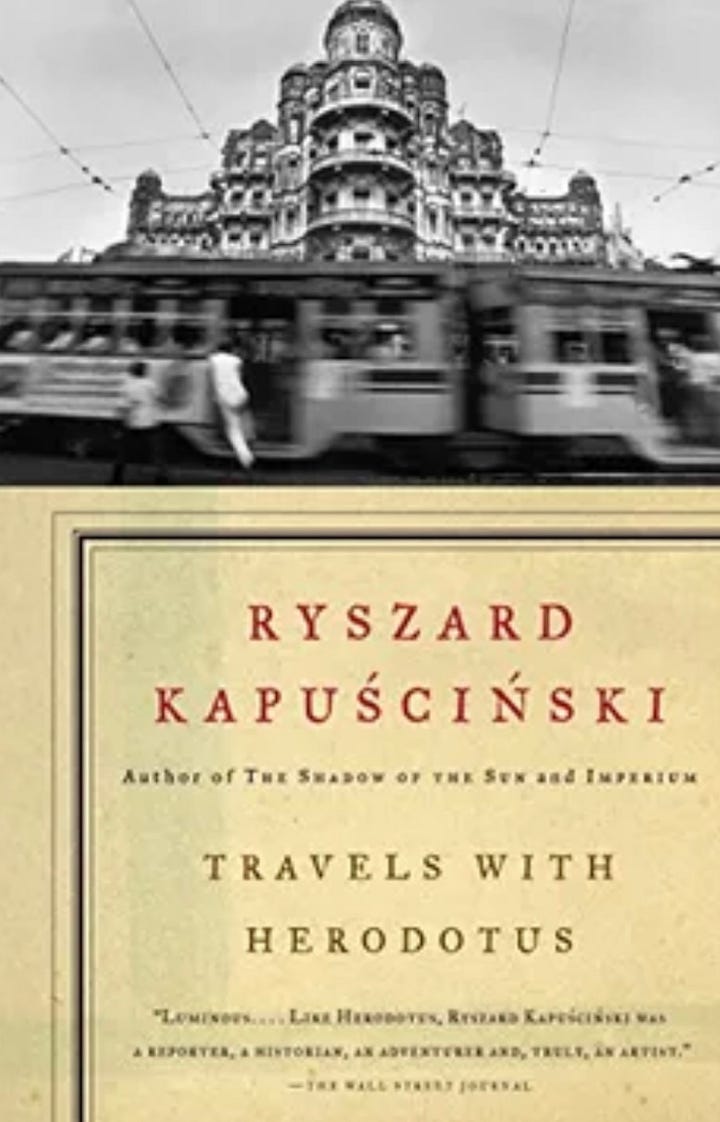
Examples:
Ryszard Kapuściński – especially Travels with Herodotus, which blends reportage, history, and philosophical travel.
Philip Marsden – politically and culturally attentive travel writing, often centred on borderlands.
Samanth Subramanian – essays where place, power, and lived reality intersect.
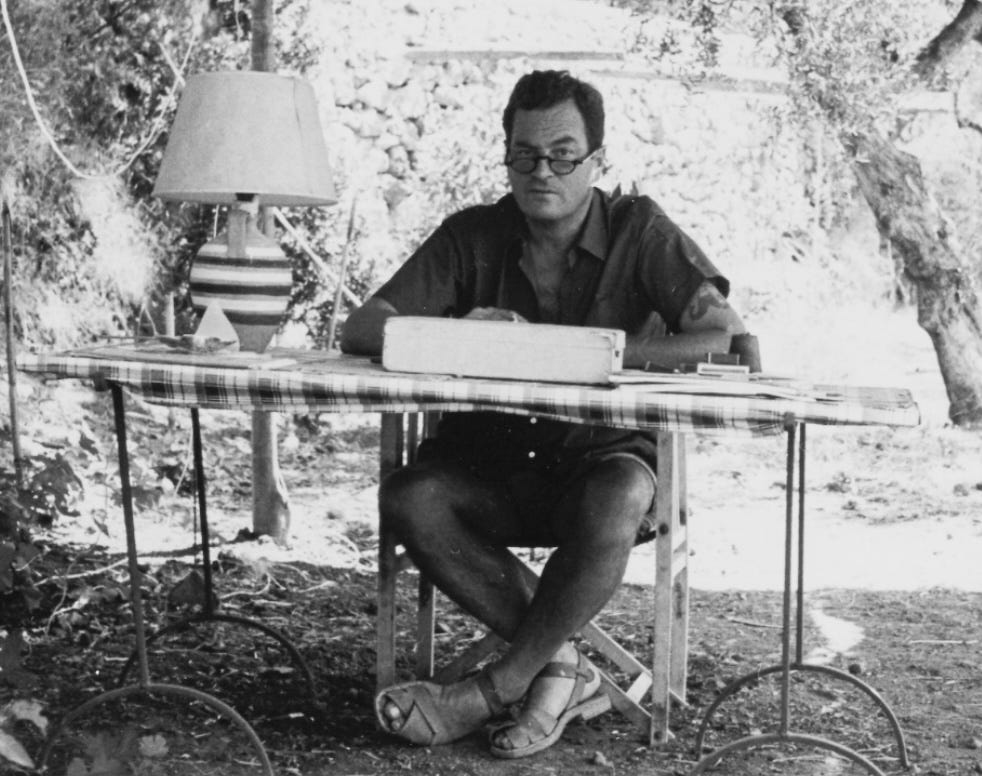
Patrick Leigh Fermor – beneath the lyricism, he was an acute witness to Europe on the brink of transformation.
Why they matter now:
Their work feels increasingly relevant in a moment when readers want context, not just experience.
2. The Personal Cartographer
These writers make emotional geography visible. Travel becomes a way to explore identity, grief, freedom, belonging – often without tidy conclusions.

Examples:
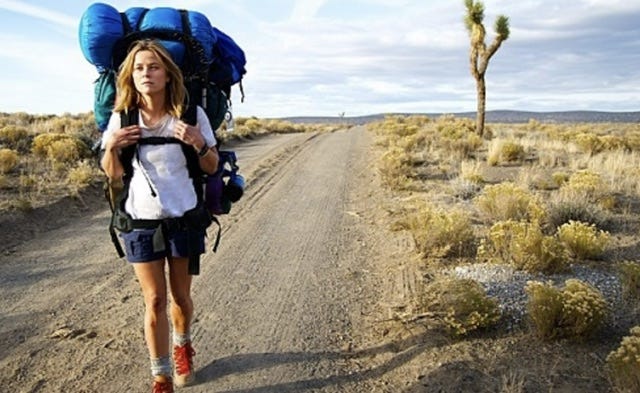
Cheryl Strayed – Wild is as much an interior journey as a physical one.
Olivia Laing – especially The Lonely City, where place reflects emotional states with precision.
Rebecca Solnit – walks, landscapes, memory, feminism, history – all weaved together.
Pico Iyer – particularly his stillness-focused writing, where movement often happens inward.
Why they matter now:
These writers model how to make meaning. Their writing resonates with us at a deep level.
3. The Cultural Translator
These writers excel at explaining how life works somewhere – often after long-term immersion. They resist simplification while still remaining readable.
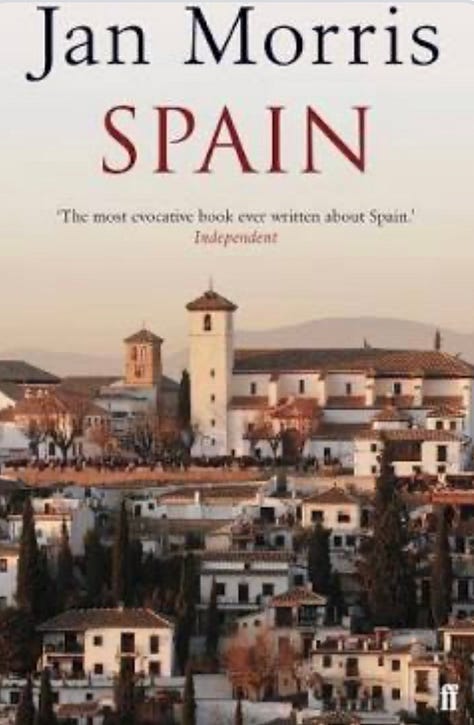
Examples:
Peter Hessler – exceptional at making daily life in China and Egypt legible to outsiders.
Jan Morris – deeply attuned to cultural texture, identity, and transformation across places.
William Dalrymple – at his best when weaving history with contemporary lived culture.
Why they matter now:
In an age of clichés and surface content, cultural translation is a skill editors are actively looking for.
4. The Place Advocate
These writers write with or for a place – often with urgency. Their work is shaped by care, responsibility, and long-term attention.
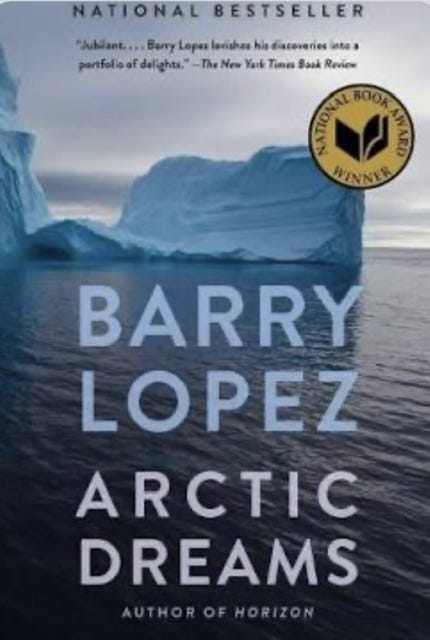
Examples:
Nan Shepherd – The Living Mountain is one of the earliest and best models of place-based reverence without sentimentality.
Robert Macfarlane – especially his landscape and nature writing tied to preservation and language.
Barry Lopez – whose work consistently argued for ethical attention to land and culture.
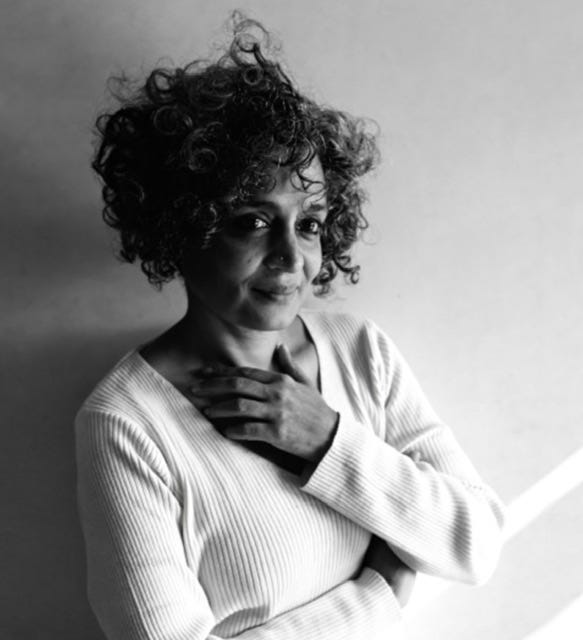
Arundhati Roy (both in her fiction and essays) – place as political and moral responsibility.
Why they matter now:
With climate, over-tourism, and extraction dominating the conversation, advocacy-driven place writing is no longer niche – it’s essential.
5. The Craft-First Stylist
These writers are deeply invested in language itself. Travel gives them a framework, but craft is always foregrounded.
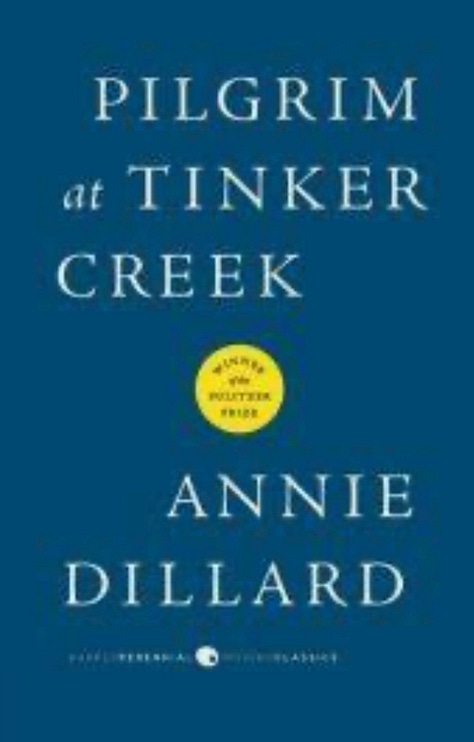
Examples:
Bruce Chatwin – fragmentary, stylish, often provocative in form and voice.
Helen Macdonald – prose where landscape, thought, and sentence-level precision are inseparable.
Annie Dillard – unmatched when it comes to attention and control.
Why they matter now:
In a fast, content-heavy information-driven world, their work reminds us that how something is said still matters.
Many of the most influential travel writers change type over time. Careers arc. Voices deepen and context changes. So the question for you isn’t,“Which category do I belong to?” But rather, “Which mode am I strongest in right now – and am I building my work around that truth?”
There are no right answers, or one way to be a travel writer. Better to notice what you’re drawn to and be true to that rather than trying to chase writing trends that you feel are forced for you.
Here’s a short, reflective quiz, if you’re still not sure where you fit in:
Don’t overthink it. Jot down the letter you choose most often, or just notice which statements sit closest.
1. When you arrive somewhere new, what’s the first thing you want to understand?
- A How power works here – who benefits, who doesn’t
- B How this place changes the way I feel and think
- C The unspoken rules people follow every day
- D What’s at risk, disappearing, or misunderstood
- E How to describe this place without cliché
2. Which feedback secretly delights you the most?
- A “I’d never thought about this place like that before.”
- B “This made me feel less alone.”
- C “This finally helped me get it.”
- D “This made me care.”
- E “That sentence is going to stay with me.”
3. Your notebooks (digital or otherwise) are full of:
- A Statistics, headlines, overheard conversations
- B Emotional shifts, dreams, personal turning points
- C Small details of daily life and social codes
- D Notes on history, ecology, injustice, preservation
- E Phrases you’re drawn to again and again
4. An editor emails asking, “What’s the real story angle?” You instinctively answer:
- A “Here’s what’s really happening beneath the surface.”
- B “Here’s what this journey changed for me.”
- C “Here’s what outsiders usually misunderstand.”
- D “Here’s why this place matters right now.”
- E “Here’s a form and voice you won’t have seen before.”
6. If left completely alone to work, you’d most likely end up writing:
- A A reported essay grounded in place
- B A personal narrative with travel as the catalyst
- C A quietly immersive cultural portrait
- D A change-seeking piece shaped by care, urgency, or concern
- E Something strange, precise, and beautifully made
If you got:
Mostly A → The Witness
You write to observe, contextualise, and reveal what’s often missed.
Mostly B → The Personal Cartographer
Your work maps interior shifts through physical movement.
Mostly C → The Cultural Translator
You excel at making unfamiliar places legible – without over-simplifying them.
Mostly D → The Place Advocate
Your writing is rooted in responsibility and long-term attention.
Mostly E → The Craft-First Stylist
Language isn’t purely decorative – it’s the point.
If you’re split between letters? That’s normal. Most writers are hybrids, and those hybrids often produce the most interesting work.
What kind of travel writer are you leaning toward becoming – not the version you think you’re supposed to be?
Laura McVeigh is an internationally bestselling Northern Irish novelist and travel writer. Her work is widely translated. She has authored books for Lonely Planet, DK Travel, travel writing published by Bradt Guides, bylines in the Irish Times, Irish Independent, featured by the BBC, Newsweek, New Internationalist & many more. A polyglot and former CEO for a global writers’ organisation, she has worked with writers from 145 countries. She is founder of Travel-Writing.Com and Green Travel Guides. Laura writes on storytelling, travel writing and mindful travel on Substack.